T-Mobile T-Satellite
T-Satellite is the kind of product T-Mobile exists to make: a new technology that fixes a real customer pain point. It brings coverage to places towers can't reach.
More than 500,000 square miles of the U.S. sit beyond the reach of traditional towers, which makes T-Satellite a proof point of the Un-carrier promise and of T-Mobile's network innovation. It works on the phone you already own.
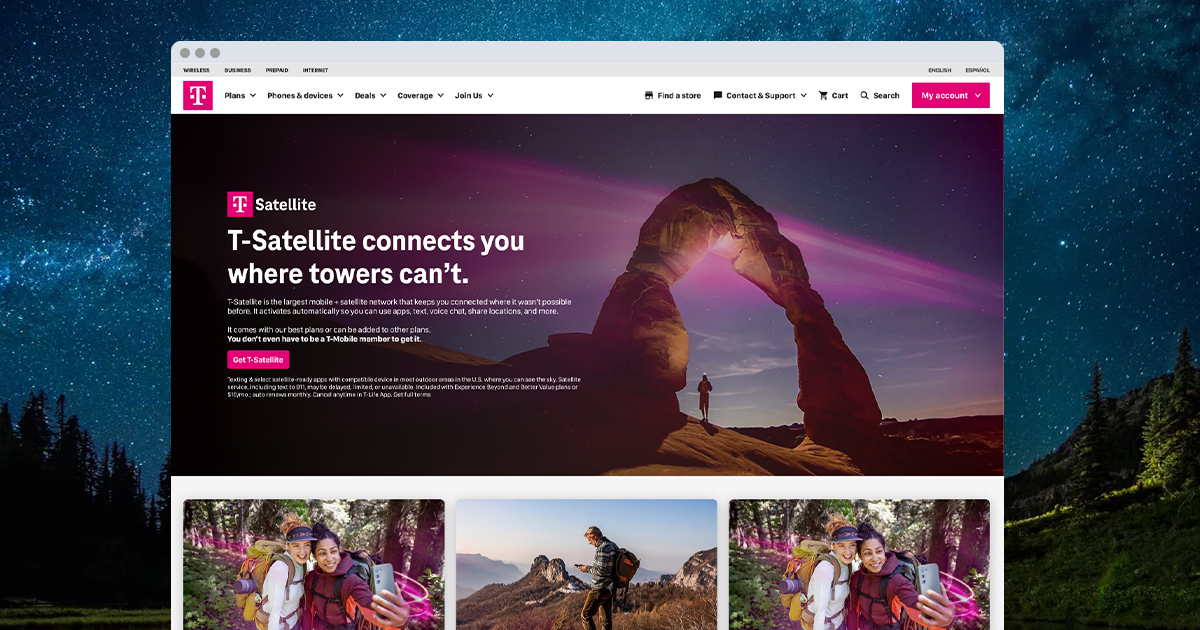
The brief for the web experience was twofold: explain a new product clearly enough that people would sign up, and tell the story of a carrier that keeps solving customer problems.
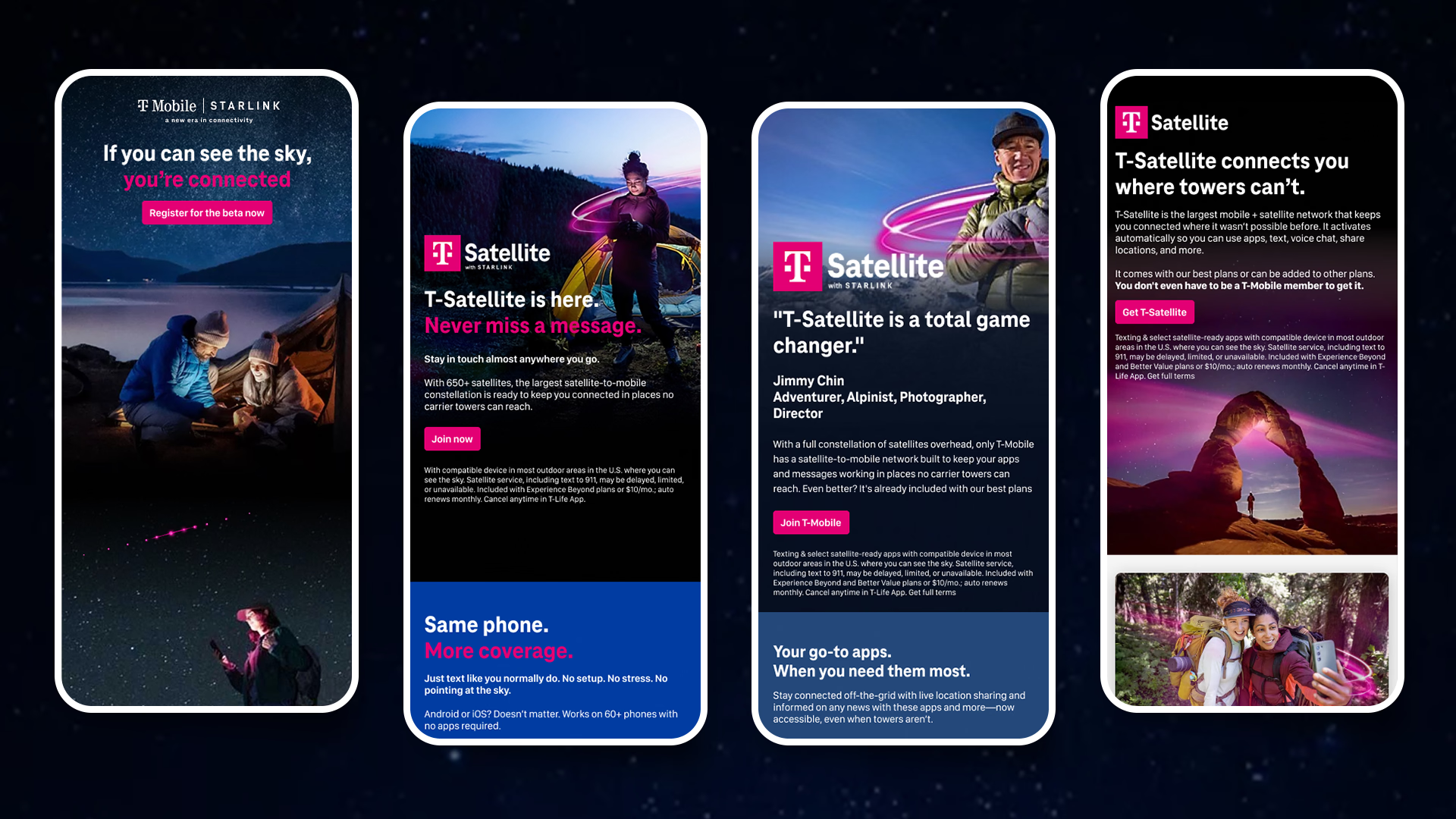
Customers weren't shopping for satellite. They wanted better coverage.
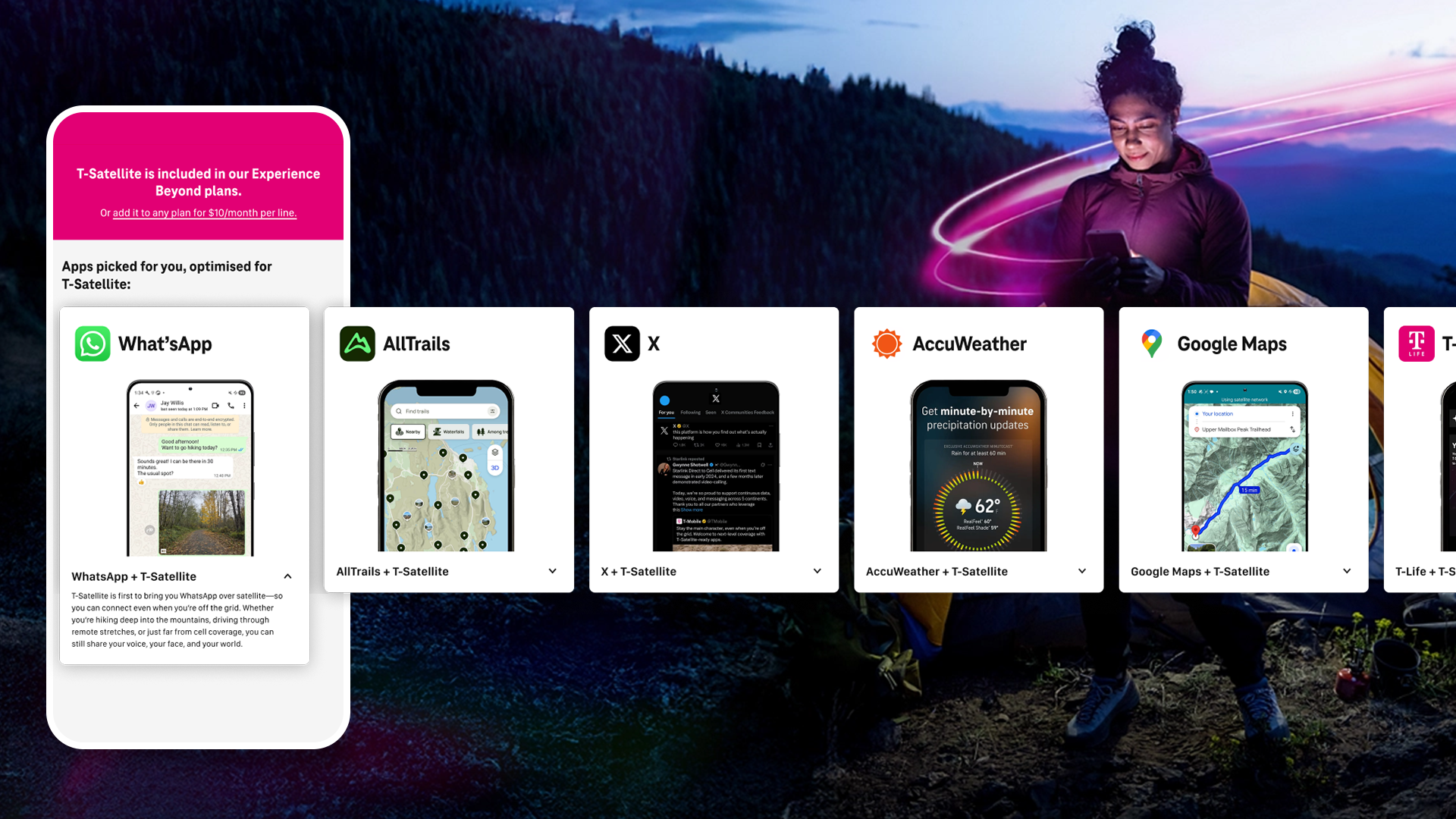
After the T-Satellite-optimized apps launched, we tested the page with 12 customers to see whether they understood it. We learned customers didn't want clever headlines or competitive comparisons with other carriers. They wanted four answers: what it is, what they could do with it, which apps worked, and what it cost. Customers weren't asking who was ahead. They were asking what it would do for them.
Satellite coverage that works on the phone already in your pocket, with no extra device to buy or carry, was new to customers. Many assumed it was satellite internet, the kind that needs its own equipment and an extra plan. The benefit was the story, so the page led with answering customer questions rather than clever marketing lines and competitive claims.
Lead with what T-Satellite enables
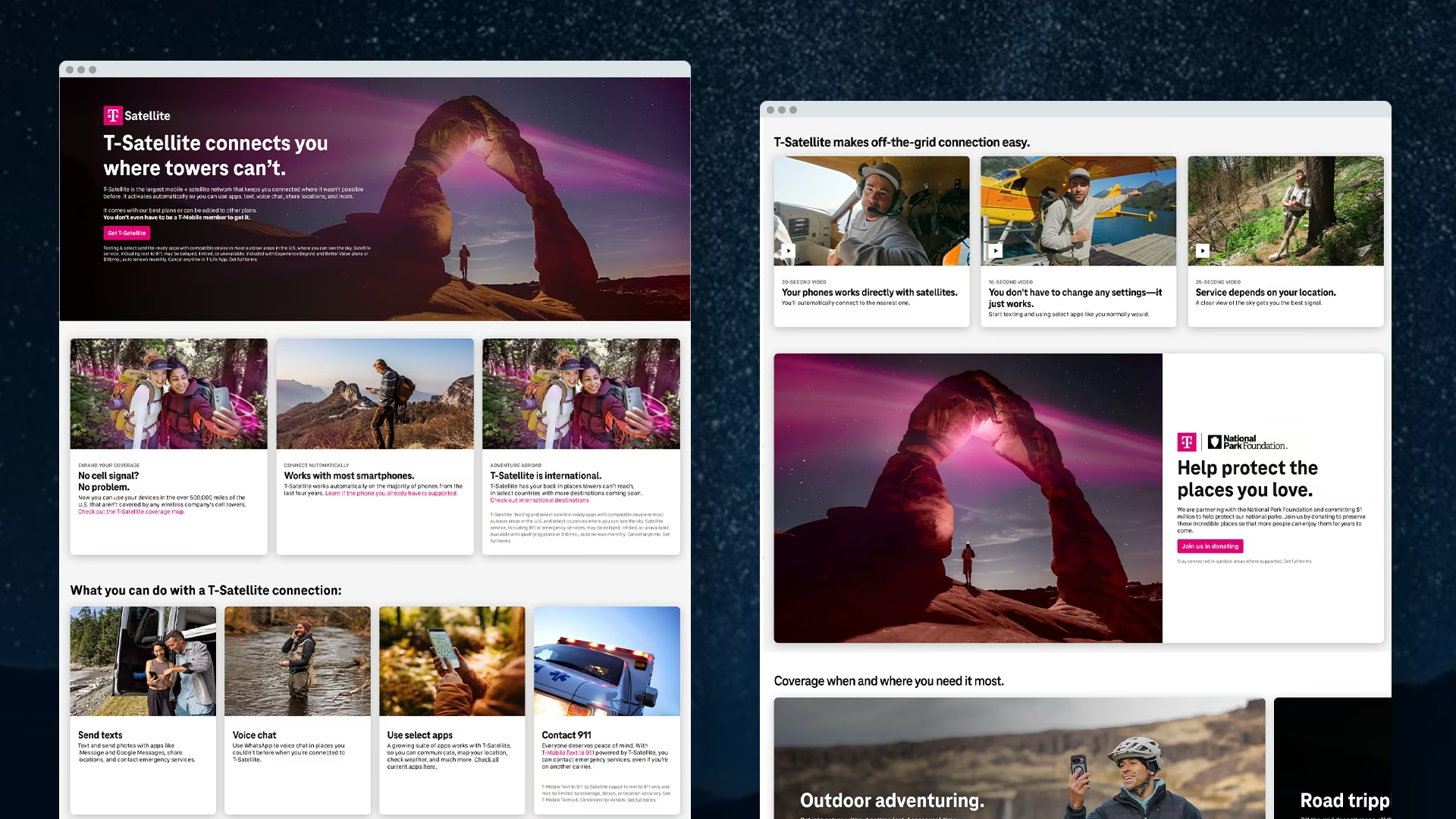
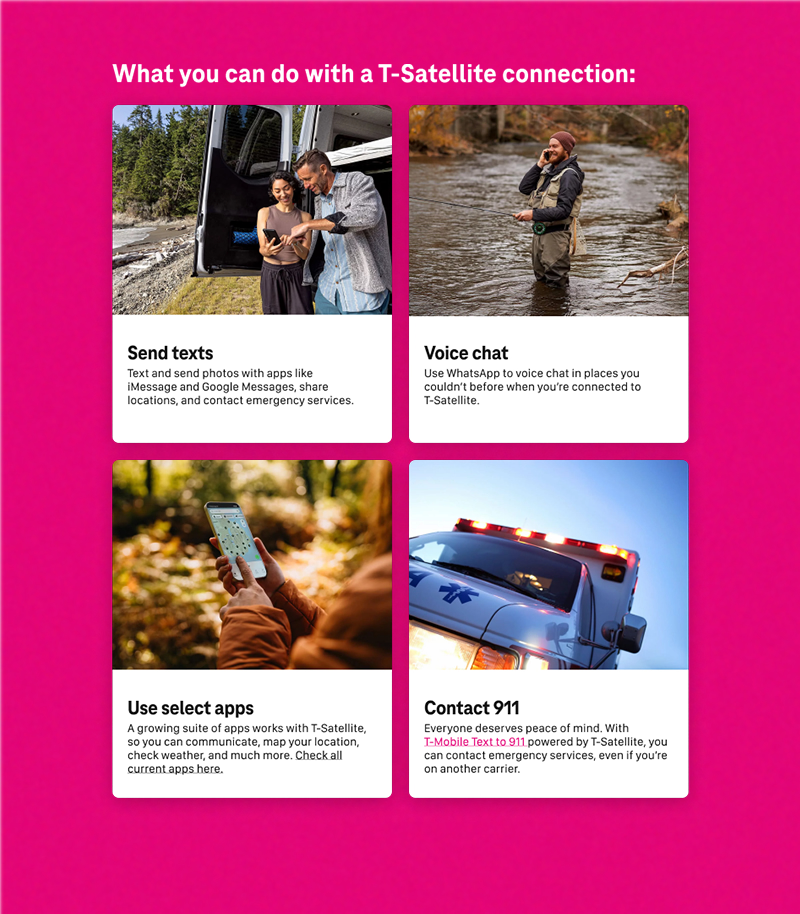
I led a content strategy that answered their questions in the order they asked them: What is it? What can I do with it? Which apps work, and what can I do with each? And then, how do I get it?
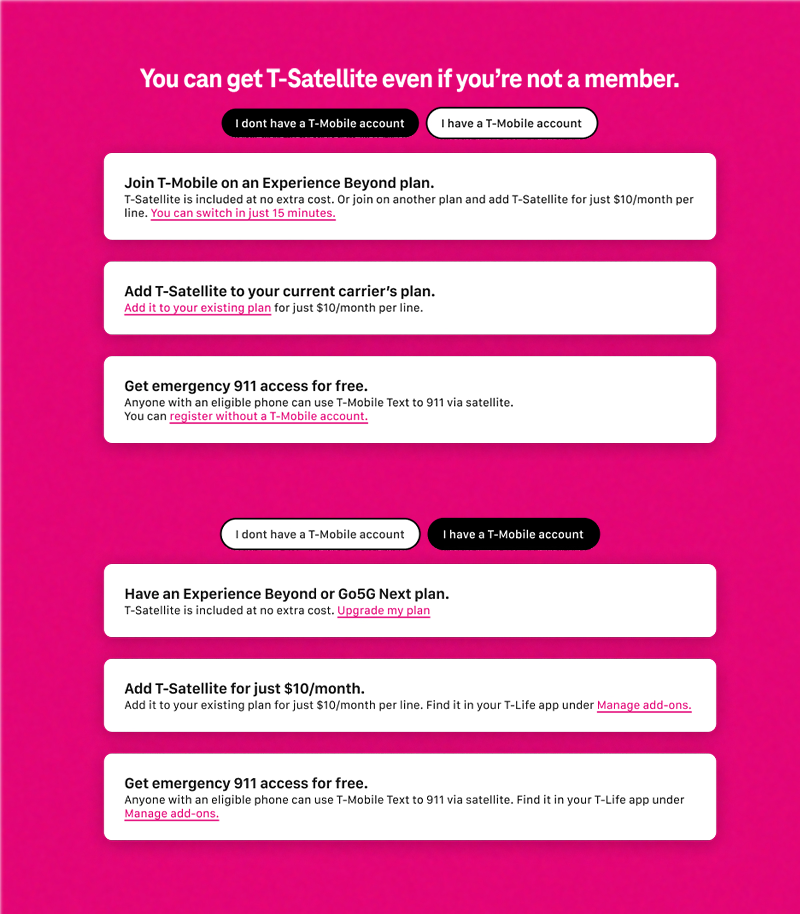
That last step was a complex journey, because customers arrived at different points. Prospects could join T-Mobile on a plan that includes it, or add it to their current plan with their current provider. Members could upgrade to a plan that includes it, or add it through T-Life. Anyone with an eligible phone could use Text to 911 via satellite, free, with or without a T-Mobile account. Ookla's Speedtest data later showed that about a third of T-Satellite usage on Android came from AT&T customers, which confirmed the prospect path mattered.
Short videos answered the equipment question head-on, and one set the right expectation: service depends on your view of the sky.
And campaigns still mattered, so the page kept a dedicated place for them below the core answers. A campaign like the National Park Foundation partnership could connect customers to the product without taking over the page.